↓
Press and announcements
Innocens and IBM partner to help doctors save precious lives

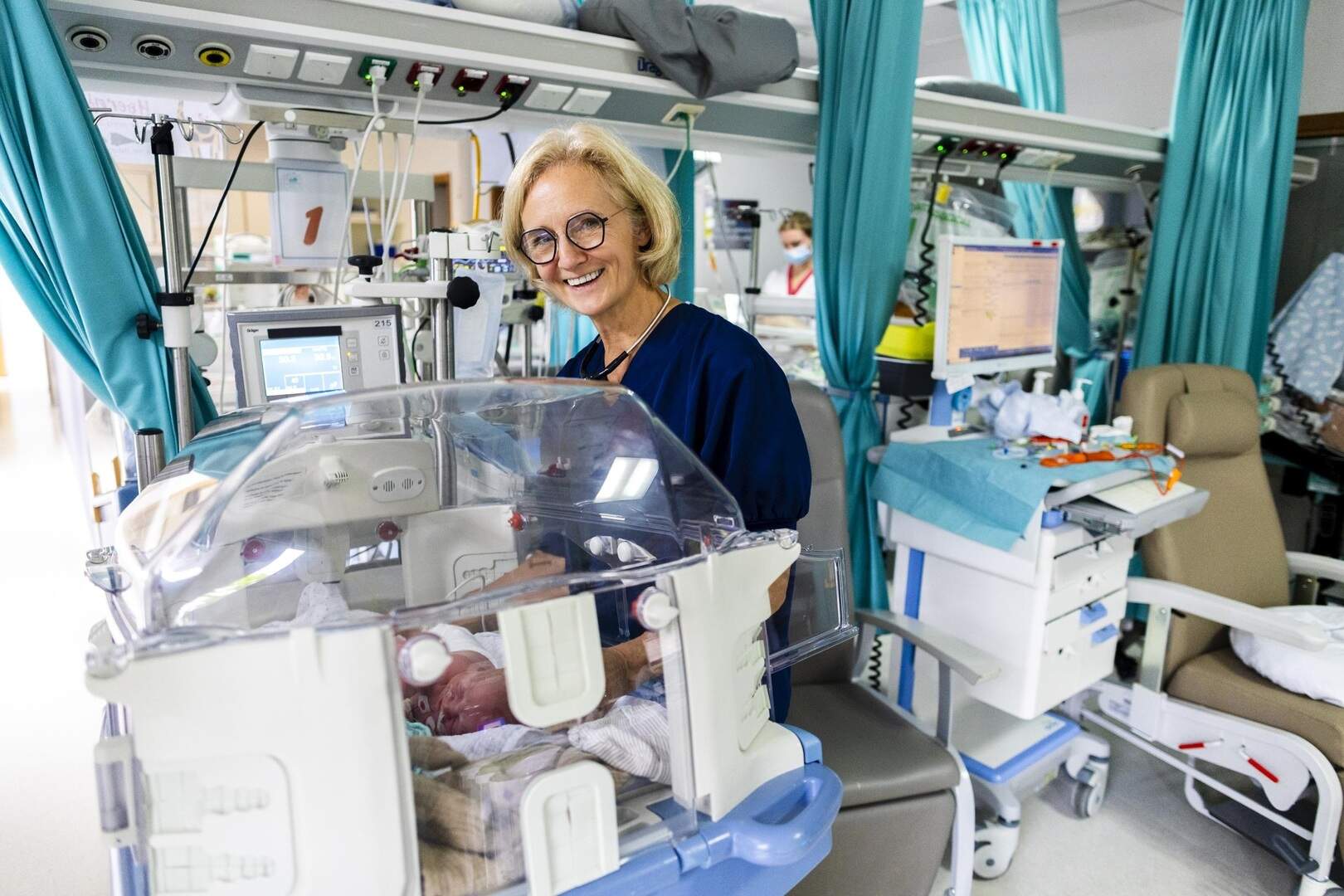
In a neonatal intensive care unit, every second counts. From the moment a preterm infant is born, the clinical team works to identify and address potential complications. The earlier a serious condition can be flagged, the sooner treatment can begin.
At Antwerp University Hospital (UZA), roughly one in five babies born under 1,500 grams develops late-onset sepsis. Detecting it depends heavily on clinical experience and on data snapshots taken across the unit. The data itself, generated continuously around every baby, holds rich clinical information. What was missing was the infrastructure to make it visible in time.
That gap is what brought Innocens and IBM together.
A shared starting point
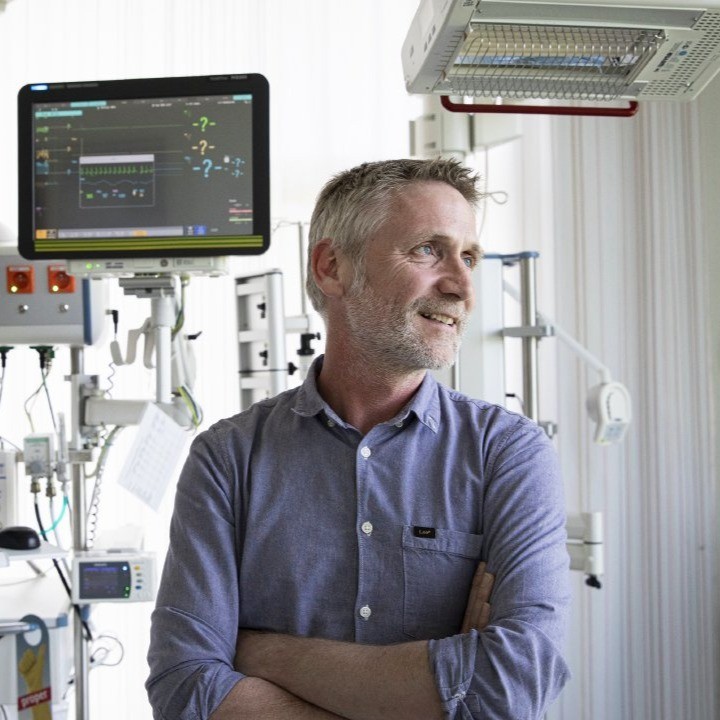
The collaboration began the way many good ideas do: in conversation. Innocens founder and CEO Dr. David Van Laere, a neonatologist at UZA, had spent more than a decade studying the patterns between vital signs and complications in preterm infants. His clinical experience showed that changes in the data often appear hours before sepsis is clinically recognized. If those changes could be surfaced sooner, antibiotic treatment could begin sooner. In sepsis, that window matters.
David shared the problem with Dirk A. Claessens, an IBM executive and a long-time friend. Across weekly bike rides and dinners, two perspectives met: a neonatologist who saw the clinical need every day, and a technologist who understood what AI infrastructure could do with the right data. They shared a conviction that the story patient data tells should not stay hidden until it is too late to act on it.
That conversation became a working partnership.
What we built together
Innocens BV was founded as a spin-off of UZA and the University of Antwerp to develop the solution. The name itself, an acronym for Improving Neonatal Outcome with a Clinical Early Notification System, reflects the ambition from the start: earlier visibility, more time to act.
IBM brought deep capability across AI, data, and predictive analytics, with support from IBM Consulting in Amsterdam, IBM Research in Almaden, and the IBM Watson Center in Munich. Innocens brought the clinical question, the bedside data, and the domain knowledge to ask the right things of it. IBM Client Engineering worked with the Innocens team on developing and testing the federated machine learning approach underpinning the solution, with IBM Watson Studio and IBM Cloud Pak for Data providing the platform to build, run, and manage the models.
Three principles guided the build from the start.
A predictive model trained on real NICU data. Using machine learning on a decade of UZA admissions data for premature and low birthweight infants, the model was developed to surface patterns in continuous patient data that may indicate emerging late-onset sepsis.
A user interface built for clinical trust. Every prediction is explainable, showing which signals are contributing to the output and how they have evolved. As Dirk put it during the build: the computer elevates human insights, but the doctor maintains control.
An on-premise architecture. The system runs locally, within the hospital's firewalls. Raw patient data stays inside the hospital. Federated machine learning means parameters can move, but the data does not. Computation happens close to the data and close to the people using it.
What it means at the bedside
The result of the partnership is a clinical decision support system that works alongside the NICU team, monitoring every infant continuously, and surfaces emerging signs of late-onset sepsis with a continuous, explainable risk score built from the patient's own monitor data.
The point of the system is not to replace clinical judgment. It is to make sure that none of the information already held in patient data stays hidden. The clinical team's attention is the most valuable resource in the unit. The technology makes sure it lands where it is needed.
The longer journey
Sepsis was the starting point, not the destination. The same model-driven approach can be applied to other complications of prematurity, and the infrastructure underneath the solution is built to support that. The collaboration with IBM gave Innocens the foundation to think beyond a single algorithm, toward a platform that can grow with the clinical questions worth answering.
We started in the NICU because that is where the problem was clearest. The infrastructure we built with IBM works wherever patients are continuously monitored.
Earlier visibility. More time to act.
↓
More from Innocens